
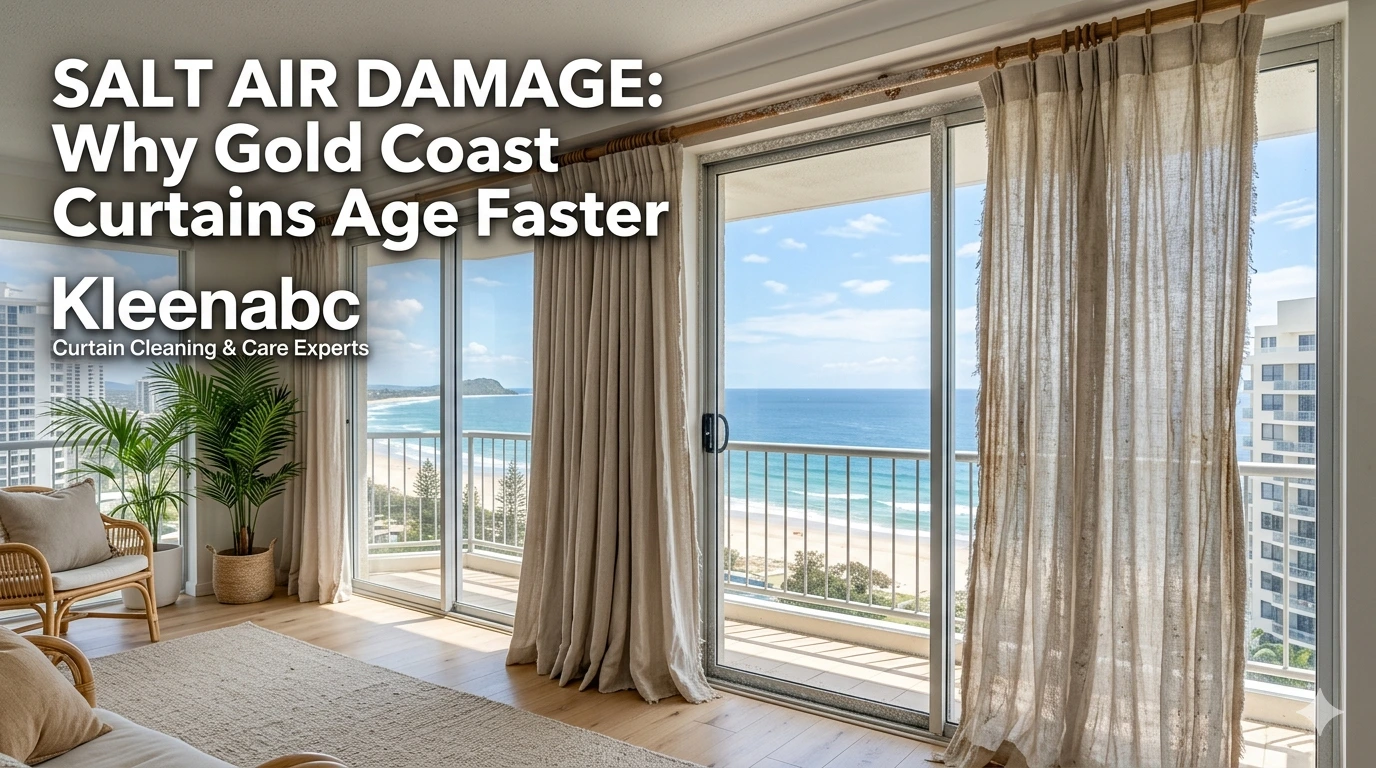
Living on the Gold Coast offers an enviable lifestyle defined by pristine beaches, Pacific breezes, and an abundance of natural light. However, the very elements that make this region a premier destination also pose a significant challenge to the longevity of interior furnishings. Among the most vulnerable items in any coastal home are curtains and window treatments. While many homeowners attribute fabric degradation to simple wear and tear, the primary culprit in South East Queensland is often the invisible presence of airborne salt.
Understanding the chemical and mechanical processes at play is essential for preserving the aesthetic and structural integrity of your home’s interior. At Kleena BC, we have observed firsthand how the unique maritime climate of the Gold Coast accelerates the aging process of textiles, turning premium drapes into brittle, stained, or frayed materials well before their expected lifespan.
The Science of Salt Air and Fabric Degradation
The proximity to the ocean means the air is saturated with microscopic salt particles. These particles are carried by the sea breeze and find their way into every crevice of a home, even when windows appear to be closed. Unlike dust, which sits on the surface, salt is hygroscopic, meaning it actively attracts and retains moisture from the surrounding environment.
The Cycle of Moisture Retention
When salt particles settle into the weave of a curtain fabric, they begin a destructive cycle. During the humid mornings typical of the Gold Coast, these particles absorb moisture, becoming a saline solution that penetrates deep into the fibers. As the day warms up and the moisture evaporates, the salt recrystallizes. This constant expansion and contraction act like a microscopic abrasive, grinding against the delicate threads of silk, linen, or synthetic blends every time the curtain moves in the breeze.
Chemical Weakening
Beyond mechanical wear, salt air initiates a chemical breakdown. For natural fibers like cotton and linen, the presence of sodium chloride can accelerate the oxidation process. This results in the “yellowing” often seen on white or light-colored drapes. Over time, the chemical bonds holding the fibers together weaken, leading to a loss of tensile strength. This is why curtains in Broadbeach or Burleigh Heads may feel “crunchy” or brittle to the touch compared to those in inland Brisbane.
The Compounding Effect of UV Exposure
On the Gold Coast, salt air does not act in isolation. It works in tandem with intense Australian UV radiation. Curtains serve as the primary barrier between the sun and your living space, absorbing a tremendous amount of solar energy.
When salt-laden fabrics are exposed to high UV levels, the degradation is exponential. The salt acts as a catalyst, intensifying the sun’s ability to bleach dyes and break down polymer chains in synthetic fabrics like polyester. This synergy often results in “shattering,” a phenomenon where the fabric becomes so weak that it literally disintegrates or tears under its own weight when moved.
Homeowners often notice this first on the leading edges of the curtains—the parts most exposed to the window glass—while the folds hidden from the sun remains relatively intact. This uneven aging is a hallmark of coastal environmental stress.
Identifying the Signs of Salt Damage
Recognizing the early indicators of salt air damage can save homeowners the significant expense of full replacements. If you live within five kilometers of the coastline, keep an eye out for these specific symptoms:
- Sticky or Heavy Texture: If the fabric feels slightly damp or “tacky” even on dry days, it is likely saturated with salt.
- Stiffening of the Drape: Curtains should hang with a fluid motion. If the pleats become rigid or lose their shape, salt crystallization is likely occurring within the fibers.
- Discoloration and Tide Marks: Small, faint rings or yellowish stains near the bottom or edges of the fabric often indicate where moisture has collected and evaporated, leaving concentrated salt deposits behind.
- Odour Retention: Salt and moisture trapped in fabric provide an ideal breeding ground for bacteria and mildew, which can lead to a persistent musty smell.
Preventative Maintenance and Professional Care
While the coastal environment is harsh, salt damage is not inevitable. With a proactive maintenance schedule, the lifespan of Gold Coast window treatments can be significantly extended.
Ventilation and Climate Control
While it is tempting to leave balconies open to enjoy the sea air, doing so during high-wind events or periods of high humidity increases the volume of salt entering the home. Using air conditioning or dehumidifiers can help manage the internal moisture levels that salt relies on to cause damage.
Regular Dusting and Vacuuming
Removing surface salt before it has a chance to settle deep into the weave is critical. Using a high-quality vacuum cleaner with a HEPA filter and a soft brush attachment once a fortnight can remove a surprising amount of dry salt particulate.
The Role of Professional Cleaning
Standard domestic cleaning methods are often insufficient for removing deeply embedded salt. In fact, improper DIY washing can sometimes exacerbate the problem by failing to thoroughly rinse out the saline solution, leading to further crystallization.
Professional curtain cleaning involves specialized processes designed to neutralize salt and gently extract minerals without stressing the already weakened fibers. At Kleena BC, our methods focus on preserving the pH balance of the fabric and ensuring that all environmental contaminants are removed, restoring the natural “hand” and drape of the material.
Choosing the Right Fabrics for Coastal Living
For those building or renovating on the Gold Coast, fabric selection is a vital consideration. Some materials are naturally more resilient to salt air than others.
- Synthetics: High-quality polyesters and acrylics generally resist the chemical breakdown of salt better than natural fibers. They are also less prone to mold and mildew.
- Blends: A mix of synthetic and natural fibers can offer the aesthetic of linen with the durability required for the Gold Coast climate.
- Acrylic Backing: Many blockout curtains come with an acrylic coating. While excellent for insulation, this coating can become sticky if salt is allowed to accumulate, making regular professional cleaning even more important for these styles.
Frequently Asked Questions
For homes located directly on the beachfront, we recommend a professional clean every 12 to 18 months. For those slightly further inland, every two years is generally sufficient to prevent permanent salt damage and UV degradation.
Unfortunately, once “shattering” begins or the fibers have physically broken down, the damage is permanent. However, if the fabric is merely stiff or discolored, a professional deep clean can often remove the salt and mineral deposits, softening the material and preventing further decay.
Generally, yes. Because sheer curtains have a looser weave and are often placed closest to the window glass, they have more surface area for salt to cling to and receive the highest dose of UV radiation. They require more frequent attention than heavier outer drapes.
The method depends entirely on the fabric composition. Some fabrics will shrink if steam cleaned, while others require the deep extraction that only specific onsite or offsite methods provide. A professional assessment is always recommended to determine the safest way to remove salt without damaging the textile.
While it helps, it is not a total solution. Salt particles are incredibly fine and enter homes through vents, under doors, and during the moments windows are opened. Even in “sealed” apartments, salt accumulation occurs over time.
Preserving Your Investment with Kleena BC
Your curtains are more than just functional window coverings; they are a significant investment in your home’s comfort and aesthetic. On the Gold Coast, the environment is constantly working against the longevity of these textiles. By understanding the impact of salt air and implementing a professional maintenance routine, you can ensure your home remains elegant and your furnishings remain intact for years to come.
If you have noticed changes in the texture or appearance of your window treatments, it may be time to address the hidden effects of the coastal climate. For expert advice and specialized cleaning services tailored to the South East Queensland environment, contact the team at Kleena BC to discuss how we can help protect your home.