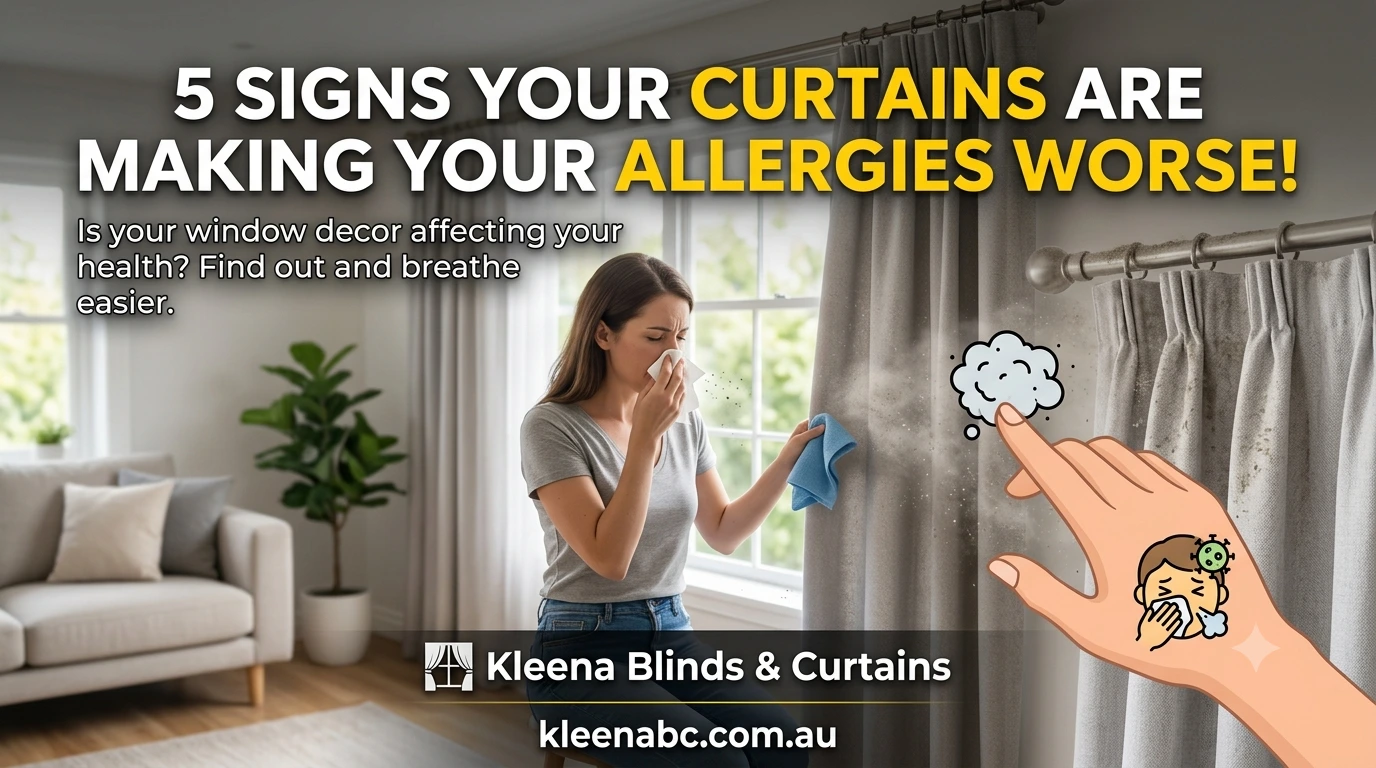
Window treatments are often the finishing touch that transforms a house into a home. They provide privacy, light control, and insulation against the Brisbane heat. However, for many residents, those same elegant drapes may be the hidden culprit behind persistent sneezing, itchy eyes, and respiratory discomfort.
While we often focus on carpets and bedding as primary allergen traps, curtains are frequently overlooked. Because they remain stationary for long periods and are rarely cleaned as often as other household fabrics, they become massive filters that collect airborne particles. If you find your allergy symptoms spiking while indoors, it is time to look closely at your window coverings.
The Role of Curtains in Indoor Air Quality
In a subtropical climate like Brisbane, our homes are subject to high humidity and a long pollen season. Curtains act as a vertical landing strip for everything floating in the air. When you open a window to catch a breeze, the fabric catches incoming pollen and outdoor pollutants. When the windows are closed, the curtains trap indoor dust mites, pet skin flakes, and skin cells.
Every time the curtains are drawn or tucked back, thousands of these microscopic particles are released back into your breathing zone. This cycle can turn a standard living room into a primary trigger site for asthma and hay fever sufferers.
1. Persistent Sneezing When Near Windows
One of the most immediate signs that your window treatments are compromised is a localised allergic reaction. If you find yourself sneezing specifically when you sit near the window or when you pull the cords to open the drapes in the morning, the fabric is likely loaded with dust.
Over time, dust settles into the folds and pleats of the material. Unlike a hard surface that can be wiped down, the porous nature of fabric allows dust to become embedded deep within the fibers. Simple movement agitates these settled particles, creating a localised cloud of allergens that can irritate the nasal passages instantly.
2. Visible Dust Accumulation and Discoloration
While many allergens are microscopic, a significant buildup of household dust eventually becomes visible to the naked eye. Take a close look at the top of your curtain rods/tracks, the headers (the gathered fabric at the top), and the deep folds of the fabric.
If you notice a greyish film or “dust bunnies” clinging to the material, the curtains have reached a point of saturation. At this stage, the fabric can no longer hold more debris, and any slight vibration from a ceiling fan or air conditioner will send those particles circulating throughout the room. Discoloration along the edges or the bottom hem, where curtains might touch the floor is another indicator of heavy soilage that harbors allergens.
3. The Presence of Musty Odours
In Brisbane’s humid months, moisture can become trapped between the glass and the curtain fabric. This creates a microclimate perfect for the growth of mold and mildew. If you detect a faint musty or earthy smell when standing near your window treatments, it is a significant red flag.
Mould spores are highly potent allergens. Even if you cannot see black spots on the fabric yet, the smell indicates that fungi are active. Breathing in mould spores can lead to more than just watery eyes; it can cause chronic coughing, throat irritation, and long-term respiratory issues. If your curtains have a block-out backing, check the space between the backing and the decorative fabric, as this is a common hiding spot for moisture-related growth.
4. Worsening Symptoms During Specific Seasons
If your allergies seem to peak during the transition of seasons, your curtains may be holding onto “legacy” allergens. For instance, pollen collected during the spring can remain trapped in heavy drapes well into autumn if they aren’t professionally cleaned.
Because curtains are rarely agitated, the particles don’t just disappear. They stay dormant until the fabric is moved or until the humidity changes. If you are suffering from “hay fever” while indoors during a time when pollen counts are low, your curtains are likely acting as a reservoir for past environmental triggers.
5. Increased Skin Irritation or Rashes
Allergens aren’t just inhaled; they can also affect the skin. If your curtains are located near a sofa or a bed where the fabric might brush against your skin, you may notice unexplained itching or redness. Dust mites, which thrive in the natural fibers of drapes, are a leading cause of eczema flare-ups and contact dermatitis. If you have children who play near or hide behind long curtains, they are particularly susceptible to this type of exposure.
Why Standard Vacuuming Often Fails
Many homeowners attempt to solve the problem by using a vacuum attachment on their curtains. While this can remove surface-level dust, it rarely addresses the root of the problem. Modern drapes are often made of complex synthetic blends or delicate natural fibers like silk and linen. Vacuuming can stretch the fabric or fail to reach the allergens embedded deep within the weave or the lining.
Furthermore, household vacuums without high-quality HEPA filters may actually exacerbate the problem by sucking up fine dust and blowing it out through the exhaust, further spreading the allergens across the room.
The Importance of Professional Curtain Cleaning
To truly alleviate allergy triggers, a deeper level of sanitation is required. Professional cleaning involves specialized equipment and solutions that break the static bond between the allergens and the fabric fibers.
At Kleena BC, we understand the specific environmental challenges faced by Brisbane residents. Our process ensures that dust mites, pollen, and mold spores are thoroughly removed without damaging the integrity or the aesthetic of your window treatments. Regular maintenance not only extends the life of your curtains but significantly improves the air quality within your home.
Frequently Asked Questions
For individuals with sensitive respiratory systems, it is recommended to have curtains professionally cleaned every six to twelve months. Homes with pets, smokers, or those located near busy roads may require more frequent maintenance to manage the higher volume of airborne particulates.
Most high-quality curtains are not suitable for standard washing machines. The agitation can cause shrinkage, damage the lining, or ruin the pleats. Additionally, home washing often fails to reach the high temperatures or use the specific surfactants needed to kill dust mites and neutralize mold spores effectively.
Yes. Heavy, textured fabrics like velvet or thick brocade have more surface area and deep “pockets” to trap dust. Sheer curtains and lightweight synthetics trap less, but they still require regular cleaning as they are often the first line of defense against outdoor pollen entering through open windows.
Absolutely. Reducing the “allergen load” in your home is a key component of asthma management. By removing one of the largest dust reservoirs in your living space, you reduce the triggers that lead to nighttime coughing and shortness of breath.
Dust is typically grey and fibrous. Mold often appears as small black, green, or brown spots and is usually accompanied by a distinct odor. However, both are harmful to allergy sufferers and require professional treatment to be removed safely from fabric.
Take Control of Your Indoor Environment
Your home should be a sanctuary from environmental triggers, not a source of them. If you suspect your window treatments are contributing to your discomfort, it is time to transition from simple dusting to a comprehensive clean.
Maintaining a healthy home in Brisbane requires attention to the fabrics that surround us every day. By identifying the signs of allergen buildup and opting for professional care, you can breathe easier and enjoy your living space without the burden of constant allergy symptoms.
For expert assistance in restoring the cleanliness and safety of your window treatments, contact Kleena Blinds & Curtains today. Our specialized cleaning services are designed to remove deep-seated allergens, ensuring your home remains a healthy environment for you and your family. Visit our website to learn more about our comprehensive cleaning solutions.