The Gold Coast sun isn’t just a tourist attraction; it’s an absolute bully. By 6:00 AM, it’s already punching through your glass, searching for any weakness in your interior defense. If you’re living anywhere from Burleigh to the northern reaches of Brisbane, you know the drill. You wake up in a puddle of light you didn’t ask for, squinting at your phone, wondering why your bedroom feels like a pre-heated oven.
When people ask if motorised blinds Gold Coast are actually worth the spend, they’re usually asking from a place of skepticism. Is it just a toy for the tech-obsessed? A badge of domestic lethargy? Honestly, if you’re still wrestling with tangled plastic cords and those stubborn, clattering wands every morning, you’re playing a losing game. It’s like using a manual crank to start your car. It works, sure, but why would you subject yourself to that friction when a better way exists?
The Tactical Edge of an Automatic Shield
Let’s be real. Nobody actually manages their blinds perfectly. You leave for work, the sky is a soft grey, and you forget to drop the shades. Three hours later, the clouds vanish, and the scorched-earth policy of the Queensland sun begins. Your leather sofa starts to cook. Your expensive rug begins its slow, pathetic fade into obscurity. By the time you get home, the damage is done, and your air conditioner has to work twice as hard to reclaim a livable temperature.
This is where the argument for motorised blinds Gold Coast moves from “luxury” to “logical necessity.” When your window treatments are smart, they’re proactive. You can schedule them to drop at 10:00 AM—right when the UV index starts to get nasty—and rise again at dusk. You aren’t just buying a motor; you’re buying a thermal gatekeeper that actually pays attention when you’re busy living your life. It’s about taking human error out of climate control.
Why Your Windows are a Financial Leak
In the southern corners of Queensland, our windows are basically giant thermal holes. Glass is a terrible insulator. It’s great for the view, but it’s a disaster for your Energex bill. When you install new blinds Brisbane homeowners often find that the biggest shock isn’t the price of the fabric—it’s the sudden drop in their cooling costs.
A motorised system ensures that the barrier is always exactly where it needs to be. You can have sensors that detect when the sun is hitting a specific side of the house, triggering the blinds to descend like a tactical shield. This isn’t just about being comfortable; it’s about stopping the solar load from penetrating the glass in the first place. Once that heat is inside, you’ve already lost the battle. The motor is the commander of your domestic energy defense.
The Death of the “Ugly Cord”
Can we talk about the aesthetic crime that is the dangling cord? It’s a mess. It’s a tangle of white plastic that invariably ends up knotted or chewed by a bored puppy. Beyond the visual clutter, there’s a genuine safety factor. If you have toddlers or pets, those loops are a legitimate hazard.
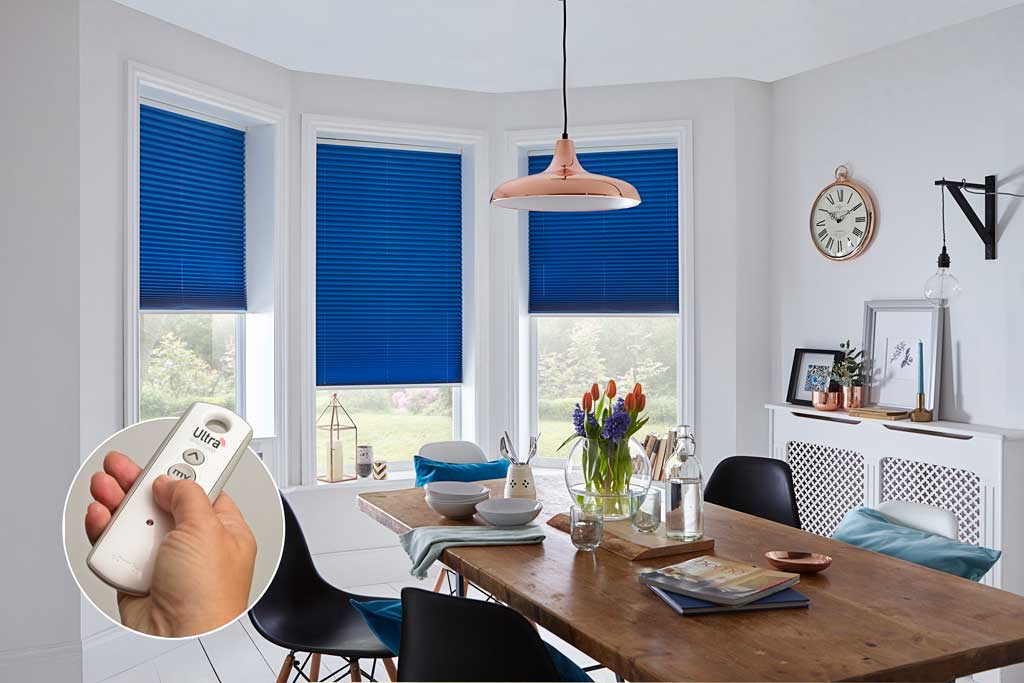
Removing the manual controls transforms the window into a clean, architectural element. The blind becomes part of the wall, moving with a silent, balletic grace that manual systems just can’t mimic. There’s something deeply satisfying about watching five massive rollers descend in perfect unison at the touch of a button. It feels like your home is finally working for you, rather than you working for it. If you’re investing in new blinds Brisbane style should be as much a priority as the shade itself. Clean lines matter.
Longevity and the “Tug of War” Problem
Manual blinds die because humans are clumsy. We pull too hard. We pull at the wrong angle. We jerk the chain when it gets stuck, which eventually shreds the internal mechanism or bends the headrail. It’s a slow death by a thousand tugs.
A motor, however, operates with a consistent, measured torque. It starts smoothly and stops precisely at the limit every single time. This lack of mechanical stress means the fabric stays aligned and the internal components don’t get battered by aggressive handling. You’re trading human volatility for robotic consistency. In the long run, this often means your blinds last years longer than their manual counterparts. You’re essentially buying insurance against your own heavy-handedness.
Integration: Making Your House Think for Itself
We’ve moved past the era of the clunky remote sitting on the coffee table. The modern motorised system lives on your phone or talks to your smart home hub. “Hey Google, I’m watching a movie,” and suddenly the room plunges into cinematic darkness. It’s a small thrill, I’ll admit, but it’s one that makes your living space feel genuinely sophisticated.
But the real magic is the “Away” mode. When you’re holidaying up the coast or heading interstate, you can set your blinds to open and close at random intervals. From the street, it looks like someone is home. It’s a subtle, effective layer of security that doesn’t involve cameras or sirens. It’s about making your home appear lived-in and active, even when you’re sipping a cold one three hundred kilometres away.
Frequently Asked Questions
Not anymore. Modern motors, especially the high-end ones we use, are remarkably quiet. It’s a soft, mechanical hum—less “industrial factory” and more “high-end luxury car.” You barely notice it.
Most modern systems have a manual override or battery backup options. Lithium-ion battery-powered motors are increasingly popular because they don’t require an electrician to wire them into the wall; you just charge them once every few months like a giant smartphone.
Quite the opposite. Because there are no cords to tangle or chains to snap, the maintenance is virtually zero. Keep the fabric clean, and the motor will take care of the rest.
If you value your time, your furniture, and your power bill, yes. It’s an upfront investment that yields daily dividends in comfort and convenience.
The Final Verdict
So, is it worth it? If you’re living in a tiny apartment with one small window, maybe stick to the manual. But if you have a Gold Coast home with expansive glass, high ceilings, or windows that are a literal pain to reach, motorisation is the only way to go. It’s about reclaiming your environment. It’s about acknowledging that the Queensland climate is a force of nature and you need a smarter way to manage it.
Don’t settle for the clunky, the manual, and the outdated. Your home should be a sanctuary, not a series of chores. Let the machines handle the sun.
Would you like me to send a consultant out to measure your windows and show you just how quiet these motors really are?